
Role of PPC Ads in SEO Ranking.
Are you new to PPC Ads? Or SEO? Or both?
PPC Ads or pay-per-click is a widely used strategy by marketers to effectively display ads on different search engines like Google, Bing, and Yahoo. It helps the ads to appear in front of the targeted audience and paying a commission to the search engine whenever there’s a click on the ad.
This is what PPC is used for, i.e., helping you out to popularise your brand name.
So, is it always the case that PPC ads play an important role in improving your SEO ranking?
Well, the answer is no.
Neither PPC ads can directly affect your website’s SEO ranking, nor can your SEO ranking affect your PPC ads.
Then what are you going to do other than making them work together to get the most traffic?
SEO and PPC ads can work together to bring out better marketing plans.
Don’t just leave thinking it’s too hard for you to achieve.
Keep reading the article to know what advantages you will get when you make SEO and PPC ads work together.
SEO + PPC = Increases Your Online Presence.
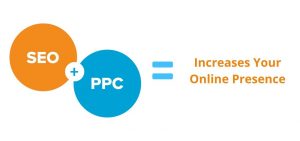
By now, you must be well aware of how important it is to improve your website’s SEO for your website to have a better ranking on the first page for one or two targeting keywords. Always try to purchase PPC ads with a higher bid for a particular keyword to make it appear at the top of the search engine page whenever someone enters a query with that specific keyword.
Optimizing your website and purchasing the right PPC ads will help your website rule the search engine page for a particular keyword.
PPC Helps You Recapture Lost Search Engine Clicks.
It is a good thing if your website is organically appearing at the top of the search engine page for a particular keyword. You might feel that if your website is going so well, you don’t need to spend on PPC ads.
Research at Google study found that when the search ads for a keyword were paused, nearly 89% of the traffic generated by these ads was not by the organic rankings. It was clear from the study that not using PPC ads might have a negative impact on your website’s ranking.
Remarketing Campaigns to Reach Old Visitors.
Even if your website is ranking well, some shoppers or potential leads take time to convert. To convert them faster, you can combine your SEO with a type of PPC, which is known as remarketing, to target your website’s old visitors to revisit your website and complete an action.
Remarketing is needed to remind the visitors that the product of their interest is still there, waiting for them to come back and complete a purchase or convert into a lead.
PPC Helps to Find New Keywords for SEO.
Often it takes a lot of time and research to find the right keywords. The particular keyword you want to use for your PPC ads will not necessarily bring you the desired results.
The only way out is to try and test the keywords out, which you think might bring the results. So, choose your keywords very carefully, or all your efforts will be in vain.
SEO + PPC = More Data for Smart Decision-Making.
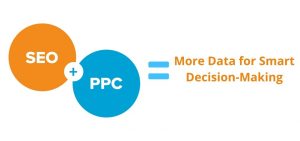
Combining SEO and PPC will provide you a lot of data for decision-making purposes. You will be able to examine metrics like click-through-rate, bounces and exit rates, time on site, and conversion rate from both your SEO and PPC campaigns.
These data will help you make smarter decisions that will ultimately help you get a purchase or capture a lead.
How To Do Keyword Research For Lead Generation?
The keywords form the basis of any successful SEO campaign and can help you boost your lead generation. As keywords are associated with SEO, you need to do proper research on them to make them as relevant as possible to your website. This will enable you to get a better ranking in the SERPs. Moreover, it will bring you more visibility and more traffic for converting into leads.
Keyword research is an important tool when it is vital for lead generation. You can easily merge this strategy with your existing marketing strategies with a few adjustments.

- There is a lot of software available in the market for keyword research. Even Google has come up with one such tool called Google Keyword Planner. It is free and does a great job of keyword researching for effective lead generation.
- You can use Google Keyword Planner or any other keyword research tool to search for the keywords and phrases related to your website. Using these keywords, you can drive in the traffic who are looking for the product/service your company offers.
- You can also use these keywords to generate ideas for topics for website articles and blogs that you will be publishing on your website. You can get a good amount of traffic if you use these keywords throughout your content. Thus using proper SEO tactics can help you with lead generation.
- Using the keywords and phrases properly while creating solid content will increase the chance of getting the desired outcome in the search engine results. This will help your audience to get in touch with you and establish a relationship between your visitors and you.
- You can use other ways like infographics and eBooks to create content using the researched keywords.
- You can even take the keywords that you are using in your blogs into your CTA (call to action) button.
Build a Better Keyword List
Selecting your top keywords is the first step in planning the optimizing approach. It will be hard to keep the track of the keywords and phrases and prioritize them. So, you start with creating a spreadsheet to track them. To determine their priority, find the keywords that are about the core of your business.
Optimize Your Keywords
There are several ways to optimize the keywords throughout your website. After creating the spreadsheet for the keywords with properly ranking them, you need to ensure that every page of your website is optimized. In other words, the search engines can find and understand what exactly your web page is about. The first thing you need to do for keyword optimization is to be done through on-page SEO and good content. There are a couple of techniques that can be used for lead generation.
- Heading: The heading of each content must match your keyword spreadsheet ranking.
- Images: Using images can surely boost your website’s ranking in the SERPs. Make sure that your images are optimized as there’s a chance of them coming up while someone enters the keywords in the Google image search.